📧 sales@hnfbattery.com 💬 WhatsApp: +86 134-8090-2696
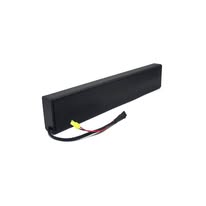
Industrial equipment operates under conditions that consumer electronics are never designed to handle. Extreme temperatures, continuous high-current discharge, exposure to vibration and shock, chemical environments, and long service life requirements all place demands on a battery that standard off-the-shelf cells simply cannot meet without compromise.
A standard consumer LiPo or 18650 cell optimized for a smartphone or laptop is engineered for moderate ambient temperatures, low to medium discharge rates, and a service life of two to three years. When that same cell is dropped into an industrial handheld scanner, a field communication device, or an autonomous mobile robot, it frequently underperforms on runtime, degrades faster than expected, or fails outright under the thermal and mechanical stresses of the operating environment.
Custom industrial battery packs solve this problem by allowing engineers and procurement managers to specify every aspect of the battery — chemistry, cell brand, configuration, discharge rate, BMS parameters, connector type, housing, and operating temperature range — to match the exact requirements of the application rather than forcing a compromise with whatever standardized product happens to be available.
Beyond pure technical performance, there is a strong commercial case for investing in custom battery specification for industrial products.
Product differentiation: A battery pack that delivers demonstrably longer runtime, wider temperature range, or higher cycle life than the competition becomes a feature in its own right. For industrial buyers who operate equipment in demanding environments, battery performance is often a primary purchase criterion, and a well-specified custom pack can justify a premium price point.
Reduced total cost of ownership: A battery pack that lasts 800 cycles instead of 400 cycles halves the replacement frequency over the service life of the equipment. For fleet operators running hundreds of devices, this translates to significant direct cost savings on battery procurement, plus reduced labor costs for battery replacement and reduced equipment downtime.
Supply chain control: Relying on a standard consumer cell that is produced by a single manufacturer and may be discontinued at any time creates supply chain vulnerability. A custom cell specification that can be sourced from multiple qualified suppliers provides resilience against supply disruptions, price spikes, and end-of-life notifications.
Regulatory compliance: Many industrial and medical device markets require specific certifications, documentation, and traceability for battery components. A custom battery supply relationship allows buyers to specify and verify the exact documentation package required for their target market from the start, rather than discovering compliance gaps after product launch.
The choice of cell chemistry is the most fundamental decision in custom industrial battery specification, as it determines the fundamental trade-offs between energy density, power density, cycle life, temperature performance, and safety that the pack can achieve.
Lithium-ion (18650/21700): The dominant chemistry for industrial portable devices, offering high energy density, good cycle life of 500 to 1000 cycles at 80% capacity retention, and a well-established global supply chain. Best suited to applications with moderate discharge rates and ambient temperatures between 0°C and 45°C. The cylindrical cell format provides robust mechanical protection and consistent manufacturing quality.
Lithium Polymer (LiPo): The preferred choice when custom form factor is the primary requirement. LiPo cells can be manufactured to any flat rectangular dimensions, enabling integration into devices with constrained internal geometries. Energy density is comparable to cylindrical Li-ion, but the pouch cell format is more susceptible to physical damage and requires more careful mechanical integration.
Lithium Iron Phosphate (LiFePO4): The chemistry of choice for applications requiring very long cycle life, high thermal stability, and inherent safety. LiFePO4 cells offer 2000 to 5000 cycles at 80% capacity retention, operate safely at temperatures up to 60°C, and are significantly more resistant to thermal runaway than NMC or NCA chemistries. The trade-off is lower nominal voltage at 3.2V per cell and lower energy density, making packs larger and heavier at the same energy capacity.
Lithium Manganese Oxide (LiMnO2) primary: For applications requiring a non-rechargeable battery with very long shelf life and operation at extreme temperatures, primary lithium manganese oxide cells offer shelf life exceeding 10 years and operation from minus 40°C to plus 70°C, making them suitable for emergency beacons, military equipment, and remote monitoring devices.
When approaching a custom battery manufacturer, having a complete specification ready reduces the risk of miscommunication and ensures that the first sample reflects the actual application requirements. The following parameters should be defined before requesting a quotation.
Nominal voltage and configuration: Define the required nominal voltage and whether a series, parallel, or series-parallel cell configuration is needed. Also specify the maximum charge voltage and minimum discharge voltage that the BMS should enforce.
Capacity and energy: Define the minimum acceptable capacity in Ah and the total energy in Wh. For applications with variable load profiles, provide a discharge profile rather than just a single current figure, as peak current requirements affect cell selection differently from average current requirements.
Discharge rate: Specify both the continuous discharge current and the peak pulse current, along with the duration of peak pulse events. High-rate applications such as power tools, AGV drive motors, and servo systems require cells with low internal resistance and high C-rate ratings that differ significantly from the cells used in low-rate IoT or monitoring applications.
Operating temperature range: Define the minimum and maximum ambient temperatures the pack must operate within, as well as any charging temperature restrictions. This parameter significantly constrains cell chemistry selection and may require the addition of heating elements for sub-zero charging capability.
Cycle life requirement: Specify the minimum number of charge-discharge cycles the pack must complete before capacity falls below 80% of the initial rated value. This requirement directly influences cell brand selection and BMS design, as achieving 1000 cycles at 80% retention requires different cell chemistry and charge termination parameters than achieving 300 cycles.
Physical dimensions and mounting: Provide the maximum envelope dimensions available for the battery pack, along with any mounting hole patterns, connector positions, or housing material requirements. For replacement packs, provide the original battery dimensions and connector pinout.
Communication interface: Specify whether the pack requires a fuel gauge output, SMBus communication, CAN bus interface, or simple voltage and temperature monitoring outputs for integration with the host system.
Understanding the typical development timeline and milestones helps product managers plan their programs realistically and avoid schedule surprises.
Stage 1 — Specification review and cell selection (1 to 2 weeks): The battery manufacturer reviews the application specification, recommends cell options, and proposes a BMS design. For complex requirements, this stage may involve multiple rounds of discussion to align on trade-offs between performance, cost, and lead time.
Stage 2 — Sample production (2 to 4 weeks): Engineering samples are produced using the specified cell, BMS, and housing configuration. Typically 3 to 10 samples are produced for initial evaluation.
Stage 3 — Client testing and validation (2 to 8 weeks): The client tests samples in the actual device or test rig, evaluating mechanical fit, electrical compatibility, runtime, BMS behavior, and safety function. Feedback is provided to the manufacturer for any necessary revisions.
Stage 4 — Revision samples if required (1 to 3 weeks): If the initial samples require modifications to BMS parameters, connector positioning, or housing dimensions, revised samples are produced and tested.
Stage 5 — Mass production (2 to 4 weeks for first batch): Once samples are approved, the manufacturer transitions to production. First-article inspection reports are typically provided to confirm that production units match the approved sample specification.
Total development timeline from first specification discussion to mass production approval typically ranges from 6 to 16 weeks depending on specification complexity and client testing duration.
HNF Battery is a factory-direct custom lithium battery manufacturer based in Dongguan, China, with experience developing custom industrial battery solutions for clients across Europe, North America, Asia, and Australia. Our engineering team works directly with product designers, hardware engineers, and procurement managers to develop battery packs that meet precise application requirements across a wide range of industrial verticals including robotics, field instrumentation, medical devices, portable communications, and energy storage.
We support custom development across LiPo, Li-ion 18650/21700, and LiFePO4 chemistries, with full in-house capability for cell selection, pack assembly, BMS integration, capacity testing, and documentation. Contact us at sales@hnfbattery.com or WhatsApp +86 134-8090-2696 to discuss your project.
Request a custom quote, or reach our team on your preferred platform.