📧 sales@hnfbattery.com 💬 WhatsApp: +86 134-8090-2696
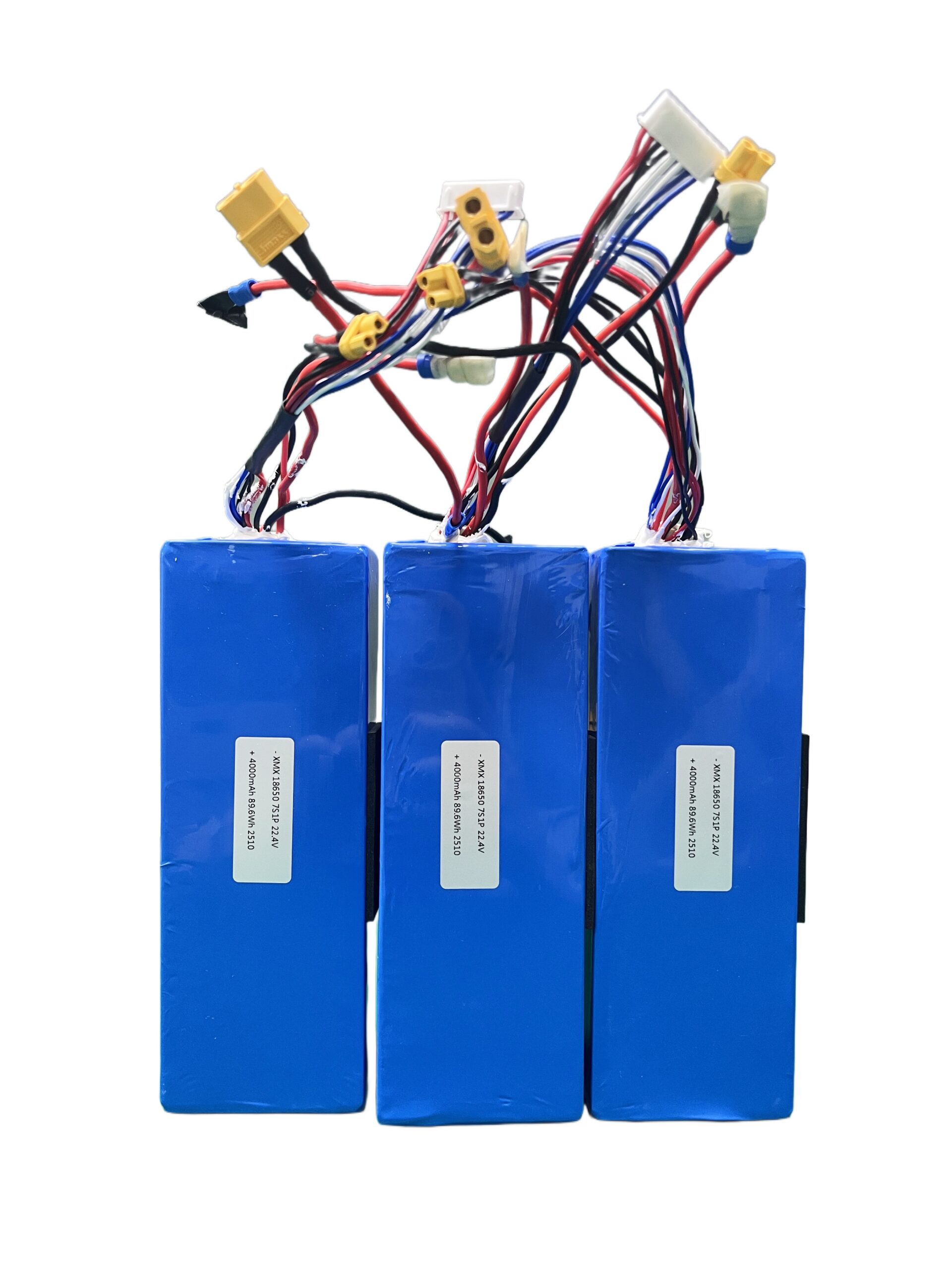
Lithium iron phosphate — commonly referred to as LiFePO4 or LFP — has moved from a niche chemistry used primarily in stationary energy storage to one of the most specified cell types in industrial portable battery applications. The shift has been driven by three converging factors: significant improvements in LiFePO4 energy density over the past decade, growing demand for batteries that can survive the full service life of industrial equipment without replacement, and increasing regulatory and commercial pressure to use inherently safer battery chemistries in environments where thermal runaway incidents carry serious consequences.
For industrial buyers evaluating battery options for new product development or fleet battery replacement programs, understanding the specific advantages and trade-offs of LiFePO4 compared to NMC lithium-ion is essential for making a specification decision that delivers value over the full product lifecycle rather than just at the point of initial procurement.
Cycle life: LiFePO4 cells deliver 2000 to 5000 cycles at 80% capacity retention under standard charge-discharge conditions. NMC 18650 cells typically deliver 500 to 1000 cycles under comparable conditions. For industrial equipment with a 10-year design life and daily charge cycles, an NMC pack may require replacement two to four times over the equipment’s life, while a LiFePO4 pack may last the full service period without replacement.
Thermal stability: LiFePO4 has an exceptionally stable crystal structure that does not release oxygen under overcharge or thermal stress conditions. This makes LiFePO4 cells highly resistant to thermal runaway, and incidents that would cause an NMC cell to vent and potentially ignite typically cause a LiFePO4 cell only to vent gas without sustained combustion. For applications in enclosed spaces, near flammable materials, or in markets with strict battery safety regulations, this intrinsic safety advantage is commercially significant.
Nominal voltage: LiFePO4 cells have a nominal voltage of 3.2V per cell, compared to 3.6V to 3.7V for NMC. This means a LiFePO4 pack requires more cells in series to achieve the same nominal voltage, and the flat discharge curve at approximately 3.2V to 3.3V requires a BMS and system design that accommodates the different voltage profile compared to NMC.
Energy density: LiFePO4 cells have lower gravimetric energy density than NMC, typically 120 to 160Wh/kg compared to 200 to 260Wh/kg for NMC. This means a LiFePO4 pack storing the same energy as an NMC pack will be larger and heavier. For applications where weight and size are the primary constraints, this trade-off may be unacceptable. For applications where cycle life and safety are the primary concerns, the weight penalty is often acceptable.
Operating temperature: LiFePO4 performs well at elevated temperatures up to 60°C continuous and tolerates brief excursions to 70°C without significant degradation. NMC cells degrade more rapidly above 45°C. For industrial applications in hot environments such as outdoor utility equipment, industrial vehicles, and manufacturing floor AGVs, LiFePO4’s superior high-temperature performance is a meaningful operational advantage.
Autonomous Mobile Robots and AGVs: Warehouse and factory floor robots operate on continuous duty cycles that demand high cycle life and reliable high-current discharge. LiFePO4 packs in 24V and 48V configurations are widely used in AGV traction battery applications where the combination of cycle life and thermal stability reduces fleet maintenance costs and downtime.
Outdoor utility and monitoring equipment: Weather stations, remote pipeline monitoring systems, grid-edge sensors, and outdoor security equipment are often left in the field for years without human intervention. LiFePO4’s superior cycle life, wide operating temperature range, and low self-discharge make it the chemistry of choice for these applications.
Industrial UPS and backup power: Rack-mounted and cabinet UPS systems for industrial control panels, communication equipment, and critical process monitoring use LiFePO4 for its long calendar life and ability to survive repeated deep discharge events without significant capacity loss.
Electric material handling equipment: Forklifts, pallet jacks, and tow tractors operating in cold storage warehouses, food processing facilities, and clean room environments benefit from LiFePO4’s ability to charge and discharge at sub-zero temperatures with appropriate BMS management, and its non-flammable chemistry reduces fire risk in sensitive environments.
Medical device power systems: Portable diagnostic equipment, surgical power tools, and patient transport devices use LiFePO4 for applications where safety certification requirements favor the chemistry’s lower thermal runaway risk and where equipment may be in continuous clinical use for many years.
Cell format selection: LiFePO4 is available in cylindrical (32650, 26650, 18650), prismatic hard case, and pouch cell formats. Cylindrical cells offer robust construction and consistent manufacturing quality. Prismatic cells provide high volumetric efficiency for large-format packs. Pouch cells enable custom flat form factors similar to standard LiPo cells.
Voltage configuration: LiFePO4’s 3.2V nominal cell voltage means that common system voltages require specific series configurations. A 12V nominal system requires 4 cells in series (12.8V nominal, 14.6V full charge). A 24V system requires 8 cells in series. A 48V system requires 15 or 16 cells in series depending on the exact voltage window required by the motor controller or inverter.
BMS design for LiFePO4: The BMS for a LiFePO4 pack must be specifically calibrated for the LiFePO4 voltage window, with charge termination at 3.65V per cell and discharge cutoff at 2.5V per cell. Using an NMC BMS on a LiFePO4 pack will result in chronic undercharging, significantly reducing available capacity. Active balancing is recommended for large multi-cell series strings to compensate for the very flat discharge curve that makes passive balancing less effective at identifying cell imbalance.
Heating for sub-zero charging: LiFePO4 cells must not be charged below 0°C as lithium plating on the anode can occur. For applications that require charging in cold environments, the BMS should include a self-heating function using a film heater element to bring the cell temperature above 5°C before enabling the charge path.
Industrial LiFePO4 battery packs destined for professional markets typically require a more extensive documentation package than consumer LiPo cells. Buyers should ensure their supplier can provide UN38.3 transport certification for the specific cell model, IEC 62619 safety requirements for secondary lithium cells and batteries for use in industrial applications, MSDS and Safety Data Sheet compliant with EU REACH and GHS requirements, cycle life test data at the specified discharge rate and temperature, and capacity and internal resistance test reports from production batch inspection.
HNF Battery provides full documentation support for LiFePO4 custom pack projects, including UN38.3 test reports and batch quality inspection data. Contact us at sales@hnfbattery.com or WhatsApp +86 134-8090-2696.
Request a custom quote, or reach our team on your preferred platform.