📧 sales@hnfbattery.com 💬 WhatsApp: +86 134-8090-2696
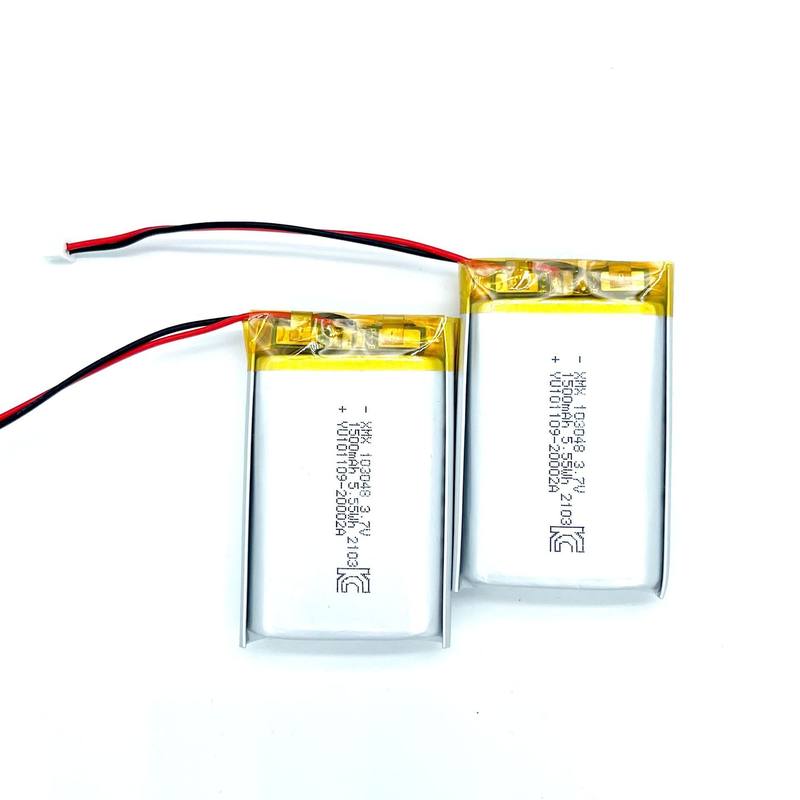
One of the most common mistakes product designers and procurement managers make when sourcing lithium polymer batteries is focusing exclusively on capacity and voltage while underestimating the importance of physical dimensions. In reality, selecting the wrong cell size can result in fitment failures during assembly, thermal management problems in sealed enclosures, and costly redesigns that delay product launch timelines.
Unlike cylindrical 18650 or 21700 cells, which come in fixed standardized dimensions, LiPo cells can be manufactured in virtually any flat rectangular size. This flexibility is one of the technology’s greatest advantages, but it also means that buyers must understand how cell dimensions are specified, how dimensions relate to capacity, and what tolerances to expect from factory production runs.
The model number assigned to a LiPo cell encodes its physical dimensions directly. The standard format uses a six-digit number where the first two digits represent thickness in millimeters, the middle two represent width in millimeters, and the final two represent length in millimeters.
For example, a cell designated 103048 is 10mm thick, 30mm wide, and 48mm long. A 063070 cell is 6mm thick, 30mm wide, and 70mm long. This naming convention allows engineers and procurement teams to immediately understand the physical footprint of a cell from its model number alone, without needing to refer to a separate datasheet for basic dimensional information.
It is important to note that the dimensions encoded in the model number refer to the bare cell body, not including the terminal tabs or overhang of the foil seal at the edges. The actual installed footprint of a LiPo cell is typically 2 to 4mm larger in each dimension than the model number suggests, and product designers should account for this when dimensioning the battery compartment.
The LiPo cell market has converged around certain popular sizes that are stocked by most manufacturers and available at competitive prices due to production volume. Understanding which sizes are common versus custom helps buyers make more informed decisions about cell selection early in the product development process.
Small format cells (under 500mAh): Cells in the 301230, 401030, and 502030 size range are commonly used in Bluetooth earbuds, smart rings, coin-cell replacement applications, small IoT sensors, and medical monitoring patches. These cells typically range from 3mm to 5mm in thickness and 12mm to 20mm in width.
Mid-small format cells (500mAh to 2000mAh): The 103048, 503759, and 604060 sizes fall into this range and are among the most widely stocked LiPo dimensions globally. They are used in GPS trackers, wearable fitness devices, handheld RC controllers, small drones, portable speakers, and compact medical devices.
Mid format cells (2000mAh to 5000mAh): Sizes such as 103072, 105070, and 804060 are commonly used in mid-sized tablets, handheld industrial scanners, field communication devices, and portable power modules. These cells balance meaningful runtime with a form factor that fits within palm-sized device housings.
Large format cells (5000mAh and above): Cells such as the 126090, 1260100, and 1270100 are used in portable power stations, e-bike auxiliary packs, large tablets, and energy storage modules. At 8000mAh to 15000mAh per cell, these represent the upper end of what is practical in a single-cell pouch format.
When designing a product around a LiPo cell, the three dimensions play different roles in the design constraint hierarchy, and understanding these roles helps engineers make better trade-off decisions.
Thickness is usually the most constrained dimension. In slim devices such as smartwatches, fitness bands, card-format trackers, and ultra-thin tablets, overall device thickness is a primary design target. The battery thickness directly determines the minimum achievable device thickness, since the battery is almost always the thickest single component in the device. Reducing cell thickness from 10mm to 6mm at the same capacity requires increasing the cell’s footprint area, which may or may not be available depending on the device layout.
Width and length determine the footprint. For most portable devices, the battery occupies a defined rectangular zone within the PCB layout. If the battery is too wide or too long, it conflicts with other components or exceeds the device boundary. For this reason, cell width and length are typically selected to fit precisely within the available footprint, with thickness then chosen to maximize capacity within that area.
Capacity scales with volume. Because LiPo cells use the same electrode chemistry regardless of dimensions, capacity is approximately proportional to cell volume. A cell that is twice as thick as another at the same footprint will have approximately twice the capacity. This relationship allows engineers to estimate the maximum achievable capacity for a given form factor before requesting a custom cell quotation.
For most B2B buyers, the choice between a standard stocked cell and a custom-dimensioned cell involves a trade-off between lead time and cost on one hand, and form factor optimization on the other.
Standard stocked cells are available from most LiPo manufacturers with short lead times of 7 to 14 days, no tooling costs, and lower minimum order quantities starting from 50 to 100 pieces. They are the right choice for prototyping, pilot production, and any application where the device can be designed to accommodate one of the common cell sizes rather than requiring an exact custom fit.
Custom cells require new electrode cutting tooling, typically costing between USD 200 and USD 800 as a one-time setup fee, and have longer lead times of 20 to 35 days for first sample production. They are justified when the device has a fixed internal cavity that cannot be modified, when maximum capacity in a specific form factor is critical to product differentiation, or when production volumes are high enough that the tooling cost is negligible per unit.
For most product development projects, HNF Battery recommends starting with the nearest standard cell size during prototyping and evaluating whether a custom dimension provides a meaningful capacity improvement before committing to custom tooling.
LiPo cell dimensions are not perfectly consistent across production batches. Understanding typical tolerances helps engineers design battery compartments with appropriate clearance and avoids assembly line fitment problems.
Thickness tolerance is typically plus or minus 0.3mm to 0.5mm for cells under 8mm thick, and plus or minus 0.5mm to 1.0mm for cells above 8mm. This variation arises from differences in electrode stack compression and electrolyte absorption during formation. Width and length tolerances are typically plus or minus 0.5mm to 1.0mm due to variation in the foil seal width and cutting precision.
Buyers designing tight-fit battery compartments should add a minimum of 1.5mm clearance on each constrained dimension beyond the nominal cell specification to accommodate production variation without causing assembly interference.
HNF Battery manufactures and supplies LiPo cells from 100mAh to over 20,000mAh across a wide range of standard and custom dimensions. Our engineering team can assist with cell size selection, capacity estimation for a given form factor, and custom tooling quotation for production programs requiring non-standard dimensions. Contact us at sales@hnfbattery.com or WhatsApp +86 134-8090-2696 to discuss your requirements.
Request a custom quote, or reach our team on your preferred platform.