📧 sales@hnfbattery.com 💬 WhatsApp: +86 134-8090-2696
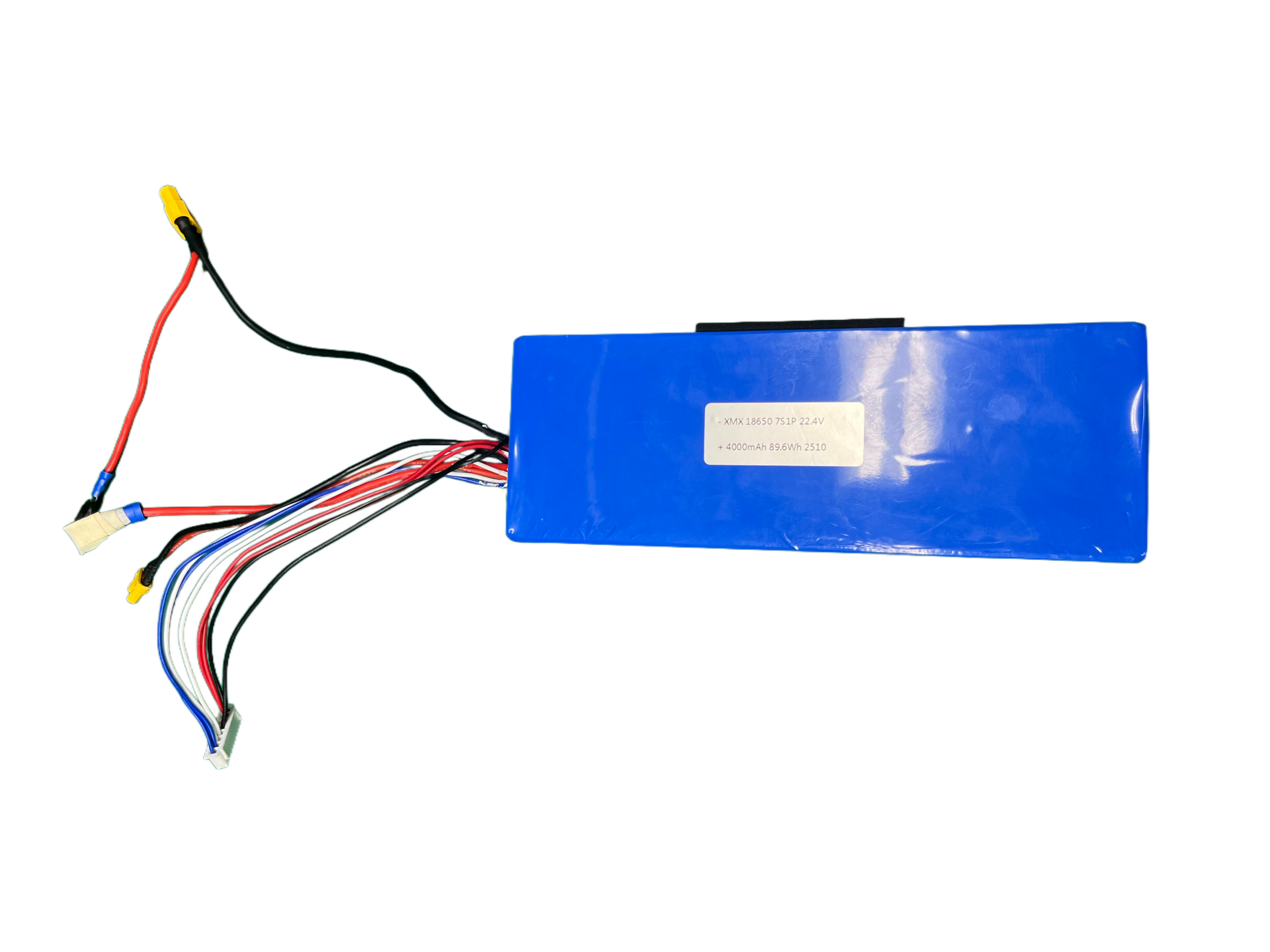
Drones, medical devices, and IoT systems represent three of the fastest-growing markets for custom lithium battery solutions, and they share a common characteristic: each application imposes a highly specific combination of performance requirements that no standard off-the-shelf battery product can fully satisfy.
A commercial inspection drone requires a battery that simultaneously maximizes energy density to extend flight time, delivers high peak current for motor response during aggressive maneuvers, survives rapid charge cycles between flights, and passes aviation authority regulations for transport and operation. A portable medical device requires a battery with traceable manufacturing documentation, ultra-low self-discharge for long shelf life between uses, reliable operation across clinical temperature ranges, and a form factor that fits a sealed enclosure without modification. An IoT sensor node requires a battery with 10-year calendar life, operation at minus 30°C in an outdoor enclosure, and a footprint small enough to fit within a 30mm diameter housing.
None of these requirements are met by walking into a distributor’s catalog and selecting a standard cell. All of them require a custom battery sourcing conversation with a manufacturer who understands specialty applications.
The unique demands of drone power systems: Drone batteries face a uniquely challenging set of requirements. Flight time is directly proportional to battery energy density, creating constant pressure to minimize pack weight. Motor response and stability under wind load require the battery to deliver high peak currents — often 10C to 30C for commercial drones — without significant voltage sag. Rapid turnaround between flights on commercial inspection programs requires fast charging capability. And the battery must survive hundreds of charge cycles without capacity fade that degrades flight performance.
Cell selection for drone applications: High-rate LiPo cells with C ratings of 15C to 50C are the standard choice for drone power. Cell brands commonly specified for commercial drone applications include cells optimized for high-rate discharge with low internal resistance, typically achieved through thinner electrode coatings that trade some capacity per unit volume for reduced impedance. For long-endurance fixed-wing UAVs where cruise current is low and peak demand is moderate, higher-capacity cells with lower C ratings deliver better energy density and longer flight time.
Pack configuration: Most commercial multirotor drones use 4S (14.8V), 6S (22.2V), or 12S (44.4V) LiPo configurations. The voltage selection depends on the motor KV rating and ESC design. Custom packs for industrial drones often include a CAN bus or SMBus interface for real-time state-of-charge reporting to the flight controller, enabling precise remaining flight time estimation.
Rapid charge design: Commercial drone operations require batteries that can be charged to 80% capacity in 20 to 30 minutes to minimize ground time between flights. Achieving this requires cells rated for 2C to 4C charge rates, a BMS with high charge current capability, and a charging system that matches the pack’s thermal management envelope. HNF Battery designs drone packs with high-rate charge capability on request, with BMS charge current ratings matched to the specified charge time target.
Regulatory and documentation requirements: Medical device batteries are subject to stricter sourcing and documentation requirements than any other consumer or industrial application. Depending on the device classification and target market, the battery supply chain may need to support IEC 62133 safety testing for portable sealed secondary lithium cells, ISO 13485 quality management system certification at the battery manufacturer, full material traceability from cell production through pack assembly, biocompatibility documentation for any materials in the battery housing that may contact the patient or clinician, and device-specific IEC or UL safety standards that include battery performance and abuse testing.
Buyers developing medical device power systems should engage with their battery supplier on regulatory requirements at the earliest stage of product development, as these requirements affect cell selection, BMS design, housing material choice, and documentation workflows in ways that are difficult and expensive to retrofit after the pack design is fixed.
Key performance requirements for medical batteries: Medical device batteries typically prioritize reliability and consistency above all other parameters. A battery that delivers slightly less runtime than specified but does so consistently across hundreds of units is far preferable to one that occasionally delivers excellent performance but shows high unit-to-unit variation. For this reason, medical battery procurement should specify tight capacity matching tolerances, typically plus or minus 2% of rated capacity, and require incoming inspection data from every production batch.
Self-discharge is another critical parameter for medical devices that may sit in a storage cabinet or emergency kit for extended periods. LiPo and NMC Li-ion cells typically self-discharge at 1% to 3% per month, which means a device stored for six months may have lost 6% to 18% of its charge before use. For applications where the device must be ready for immediate use without pre-charging, specifying cells with low self-discharge characteristics and implementing a storage state-of-charge protocol in the device firmware is essential.
Sterilization compatibility: Some medical device housings are subject to surface sterilization between uses. The battery housing material must be specified to resist the relevant sterilization agents, which may include isopropyl alcohol wipes, hydrogen peroxide vapor, or UV exposure depending on the clinical environment.
The 10-year battery life challenge: Many IoT deployments target a battery service life of 5 to 10 years without cell replacement, driven by the prohibitive labor cost of accessing and replacing batteries in remotely deployed sensors. Achieving this target requires a combination of low-power device design, intelligent duty cycle management at the firmware level, and careful battery selection and sizing.
For rechargeable IoT applications with solar or energy harvesting charging, LiFePO4 chemistry is increasingly specified for its exceptional cycle life and calendar life. For primary (non-rechargeable) applications where recharging is not practical, lithium thionyl chloride (Li-SOCl2) cells offer calendar life exceeding 15 years and operating temperature range from minus 60°C to plus 85°C, making them the default choice for deep remote monitoring applications.
Small format custom LiPo for IoT wearables: IoT wearables, asset tracking tags, and consumer health monitors require batteries in the 50mAh to 500mAh range with dimensions that fit within compact device housings, often with thickness constraints of 3mm to 6mm. Custom LiPo cells in non-standard dimensions are frequently required for these applications, as the available standard cell sizes in this small format category are limited.
HNF Battery supports custom LiPo cell production for IoT applications from 100mAh upward, with custom dimensions available from a one-time tooling investment that is cost-effective at production volumes of 1,000 units or above.
Low temperature IoT deployment: IoT sensors deployed in outdoor environments in Northern Europe, Canada, and high-altitude locations must operate reliably at temperatures down to minus 20°C or minus 30°C. Standard LiPo and NMC Li-ion cells experience significant capacity reduction at sub-zero temperatures, and charging below 0°C causes lithium plating that permanently damages the anode. For these applications, HNF Battery recommends either primary Li-SOCl2 cells for non-rechargeable deployments, or LiFePO4 cells with BMS-controlled self-heating for rechargeable applications.
Whether your application is a commercial inspection drone, a Class II medical device, or a smart city IoT sensor, the starting point for a successful custom battery project is a clear application specification document that captures voltage, capacity, form factor, discharge rate, temperature range, cycle life, certification requirements, and target unit cost.
HNF Battery’s engineering team works with clients across all three specialty application areas to develop custom battery solutions from initial specification through sample validation and mass production. We support LiPo, Li-ion 18650/21700, and LiFePO4 chemistries across a wide range of configurations and can assist with BMS design, connector selection, housing specification, and regulatory documentation planning.
Contact us at sales@hnfbattery.com or WhatsApp +86 134-8090-2696 to begin your custom battery project discussion.
Request a custom quote, or reach our team on your preferred platform.